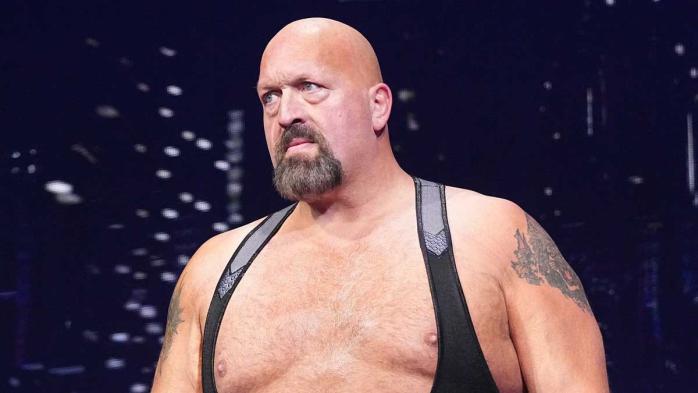

Paul Wight believes that social media has shifted the focus of professional wrestling and has caused many wrestlers to fight more for a viral clip than for the live audience in the arena. In an interview with Planet Tyrus, the WWE and AEW veteran explained that the obsession with GIFs, highlights, and short videos is replacing the most important part of the business: telling a complete story from beginning to end.
According to Wight, it is now too common to see a wrestler execute a big move, stop, pose, and seek validation from the camera or social media instead of letting the match flow naturally. In his opinion, this mentality is causing the classic ring psychology to be lost, where the crucial aspect was not the move itself, but how it was sold and how the audience reacted.
Wight also linked this change to a deeper transformation in how heroes and villains are understood. He stated that Stone Cold Steve Austin "killed the heels" because, even though he was the bad guy, he connected with people by standing up against his boss, while the nWo, in turn, made the good guys seem less "cool" in comparison. Since then, the psychology of characters would have changed forever.
"Everyone wants to defeat a giant. Everyone wants to do this, that, and the other, and then, after a while, it's like... you know? What I learned in psychology is that I can sell anything; what makes the difference is how I respond, and if you don't close the deal, I will," he commented.
"Jerry 'The King' Lawler always used to say: 'If you're not within a foot of them, I'm not interested in your match.' Yeah, and as soon as you look away. Times change. I hate change a lot. But now everything revolves around social media, appearance, 'likes,' short videos, without telling the complete story because it's about a single move. Look at the audience. A single move. 'Look at that. Look at me. Acknowledge my presence.' If I'm a heel: 'Hey, boo me.' If I'm a babyface: 'Oh, hey, cheer me on'."
Despite his criticisms, Wight is not asking for professional wrestling to go back, but for the new generation to try to recover something essential: that fans remember the entire match, not just the ten-second clip that goes viral afterwards. For him, true success still lies in people taking away the complete story, not an isolated moment optimized for social media.
 ES
ES
 US
US


